Secure the transition to reusable solutions
For a long time, packaging was considered a secondary concern in companies.
Cardboard boxes, plastic wrap, and so on. They were simply part of the logistics process, never really questioned. We bought them, used them, and threw them away. The cost was low, immediate, and, above all, hardly noticeable.
But this model is changing, and switching to new packaging isn't something that can be done on the fly.
Loopipak works with companies looking to replace their single-use packaging with reusable solutions tailored to their logistics processes.
The process consists of 3 steps: Analyze, Test, Deploy
The Loopipak method:
To ensure a smooth transition to reusable packaging, Loopipak follows a three-step phased approach:
- Understanding the flows
- Test the system
- Deploy and optimize
This approach helps reduce operational risks, validate the cost-effectiveness of reusable items, and ensure seamless integration into existing logistics workflows.
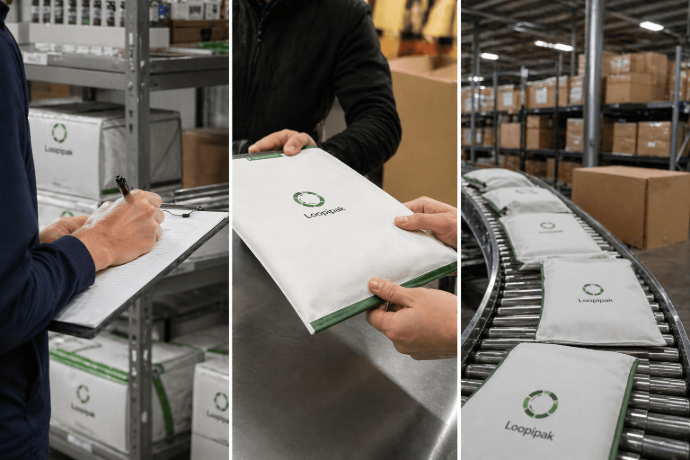
A 3-step method:
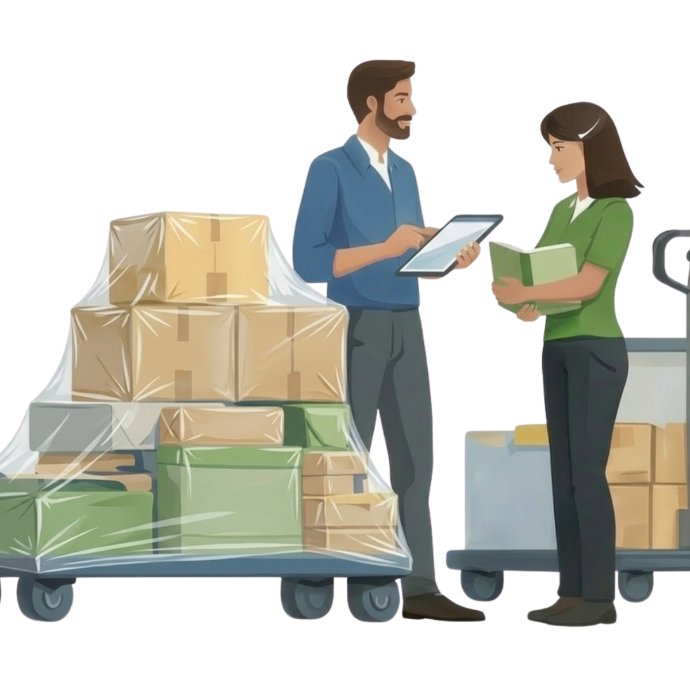
1. Analyze
A) Flow analysis:
Objective: Loopipak analyzes a logistics flow to identify opportunities for transition.
What Loopipak does:
L'analyse se porte sur :
- Types of packaging used
- Shipping volumes and frequencies
- Logistical constraints
- The organization of internal and external flows
- Packaging costs and waste management
Deliverable: Overall summary of the assessment
B) System design:
Objective: Based on the assessment, Loopipak recommends the most suitable packaging system
What Loopipak does: there are two possible approaches:
- Standard system
- Custom system
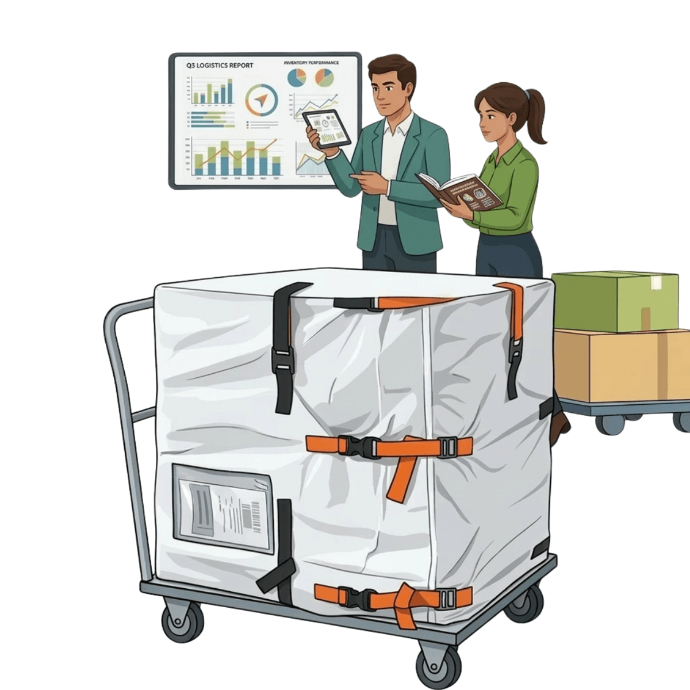
2. Test
Objective: To test the system under real-world conditions and validate its economic and environmental performance prior to a larger-scale deployment.
What Loopipak does:
A) Implementation of the pilot project:
Loopipak helps teams set up a fully operational pilot ready for use in real-world conditions, including:
- An initial batch of packaging deployed on a designated production line
- A defined testing protocol
- Trained and coordinated teams
- A streamlined logistics process
- Signage and operational materials are in place
Deliverable: a real-world scenario ready to generate operational evidence
B) Feasibility study:
Loopiak performs a comparative analysis between:
- A linear logistics system based on single-use packaging
- A circular logistics system based on reusable packaging
In many cases, reusable solutions become cost-effective after several dozen uses. In certain logistics flows, some solutions reach their break-even point after as few as 35 uses.
C) Environmental Analysis
Loopipak is conducting a Life Cycle Assessment (LCA) comparing the reusable solution to single-use packaging.
The analysis makes it possible to assess:
- CO2 emissions
- Resource consumption
- Overall environmental impacts
The results enable companies to incorporate this data into their CSR strategies or carbon footprint assessments.
Result: Operational, economic, and environmental validation of the system: This second phase enables the company to validate the cost-effectiveness of reusable solutions prior to any large-scale deployment and to make an informed investment decision based on real-world operational data.
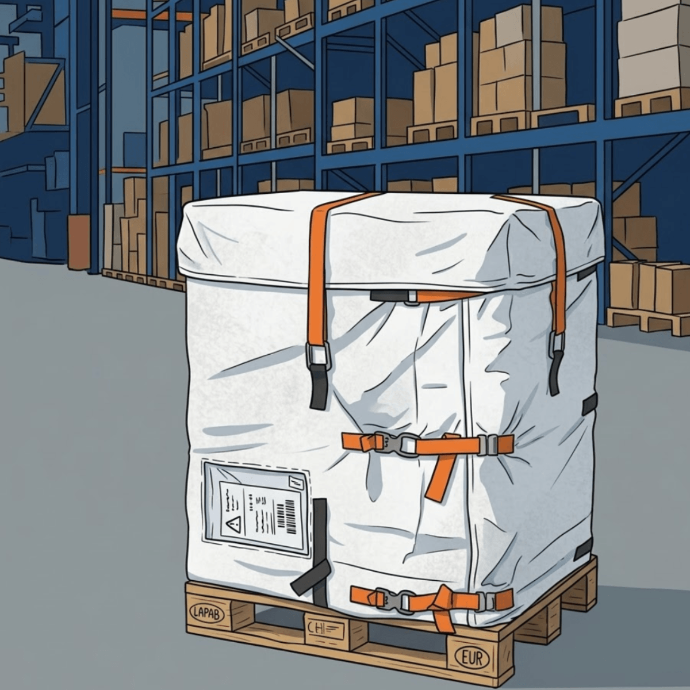
3. Deploy
Objective: Deploy the reusable system across the entire logistics chain and ensure long-term performance.
What Loopipak does:
A) Support for large-scale deployments:
Extension of the system validated during the pilot project to the entire relevant logistics process.
Scope
- Expansion of the reusable packaging system to the entire organization
- Incorporating lessons learned from the pilot project
- Determining the size of the packaging inventory
- Integration into existing logistics processes
- Team support
B) Monitoring of indicators:
- Return rate
- Rotation speed
- Loss rate
- Shelf life of packaging
C) Optimization and logistics:
- Adjusting the number of packages
- Optimizing Returns
- Improvements to signage
- Team-building tools
D) Maintenance and repair:
Since Loopipak packaging is designed to be repairable:
- Parts Replacement
- Repairs
- Extended service life
Preventive maintenance and repairs can be scheduled to keep the packaging in good working order.
Maintenance and repair procedures (frequency, organization, responsibility, costs) can be determined in consultation with the customer based on operational needs.
The result: a fully operational and optimized reusable packaging system that sustainably reduces the use of single-use packaging.
Extension to other logistics flows:
Once reuse solutions have been implemented for an initial stream, the company has a practical methodology and set of processes in place.
The experience gained then makes it easier to apply these principles to other logistics processes: shipments to other customers, internal transfers between sites, or product transportation.
This phased approach allows for the gradual expansion of reusable solutions across all logistics flows, building on the experience gained from the first project.
What sets Loopipak apart:
- Custom Solutions
- Manufactured from recycled materials
- Production at ETA
- Clear and transparent analysis
- Options for renting or buying
- Comprehensive support
I would like to be assisted by Loopipak
Make an appointment +32 470/876.641
